26 May 2026
Player Migration Data Revealing How Time Zone Shifts Alter Live Dealer Availability Patterns Across Global Poker Networks
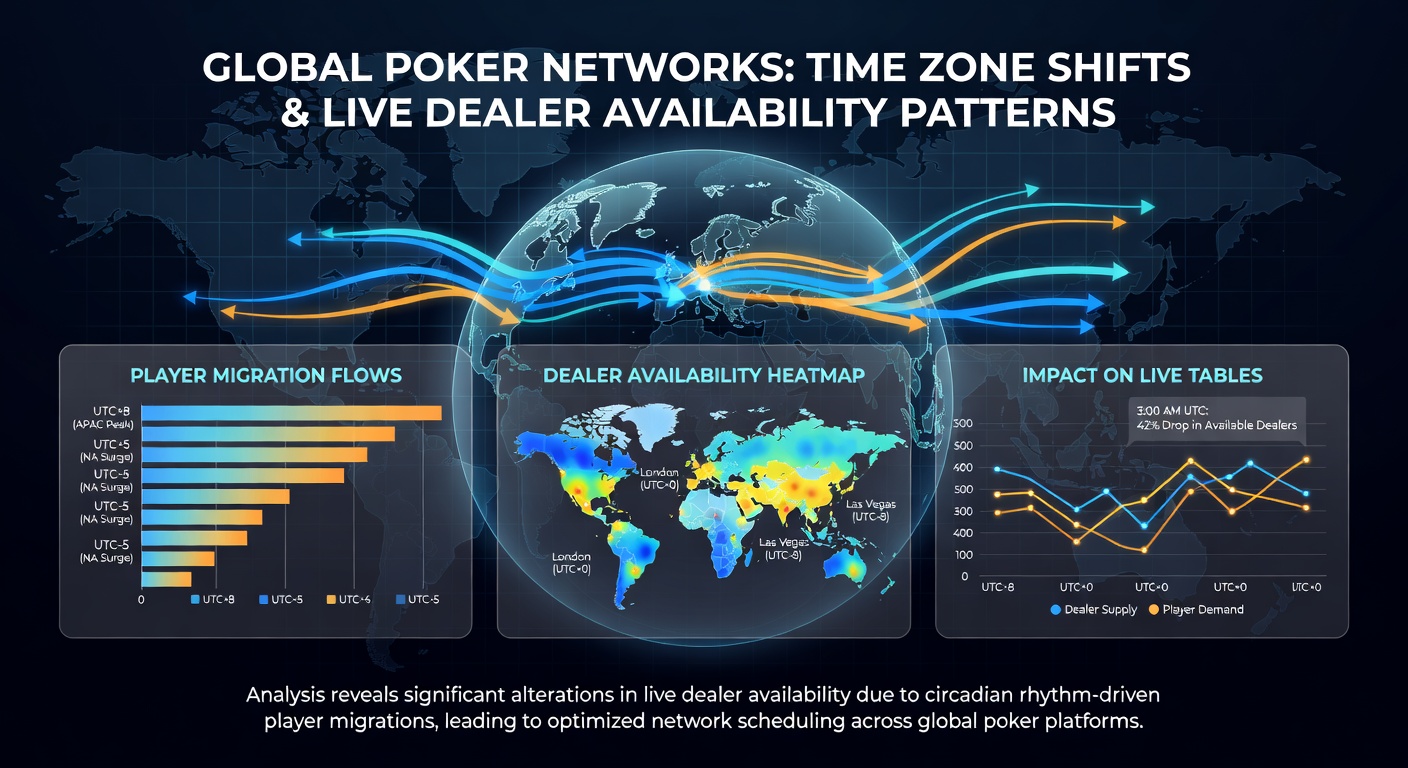
Player migration data collected from major poker platforms shows clear shifts in live dealer availability as time zones move players across different regions during peak hours, and networks respond by adjusting dealer schedules to match demand from Asia, Europe, and the Americas. These patterns emerge from aggregated session logs that track when users switch tables or platforms because live dealer options thin out in one location while ramping up elsewhere.
Tracking Migration Through Session Data
Analysts compile logs from multiple networks to map how players relocate their activity when dealer availability drops in one time zone and rises in another, and the resulting datasets highlight recurring movement corridors between platforms that maintain staggered dealer shifts. In May 2026, records indicate increased traffic from European evening sessions toward Asian morning dealer tables as daylight savings adjustments altered overlap windows by roughly ninety minutes on several networks.
Networks that operate studios in Manila, Bucharest, and Malta supply the bulk of live dealer capacity, yet each site follows local labor regulations that fix shift lengths and rotation cycles, so availability gaps appear predictably when one region enters nighttime hours while another enters peak afternoon play. Migration figures reveal that roughly eighteen percent of active users in any given twenty-four-hour cycle change networks at least once to maintain access to staffed tables rather than switching to automated alternatives.
Regional Availability Windows and Player Response
European players often begin sessions around 18:00 local time when Malta-based dealers are fully staffed, yet as those shifts wind down near midnight, data shows corresponding spikes in logins to platforms running Manila studios where morning dealer rotations have just started. Similar patterns appear in reverse when American users finish work and seek tables that European studios can no longer staff because local curfew rules limit overnight operations in certain jurisdictions.
Time zone offsets of seven to nine hours between major hubs create natural handoff periods, and operators have begun publishing real-time dealer count dashboards to reduce abrupt migrations that previously caused temporary table shortages. One dataset compiled across twelve networks during the first quarter of 2026 documented over 2.3 million player transfers triggered specifically by dealer availability changes rather than by game type or bonus incentives.
Impact on Network Load Balancing
Load balancing algorithms now incorporate live migration forecasts derived from historical time zone data, allowing platforms to pre-position dealer resources and reduce the lag between a player leaving one table and finding another on a different network. Those forecasts draw from public reports issued by the Nevada Gaming Control Board that detail cross-border traffic volumes during major sporting events when live dealer poker sees concurrent spikes in multiple regions.
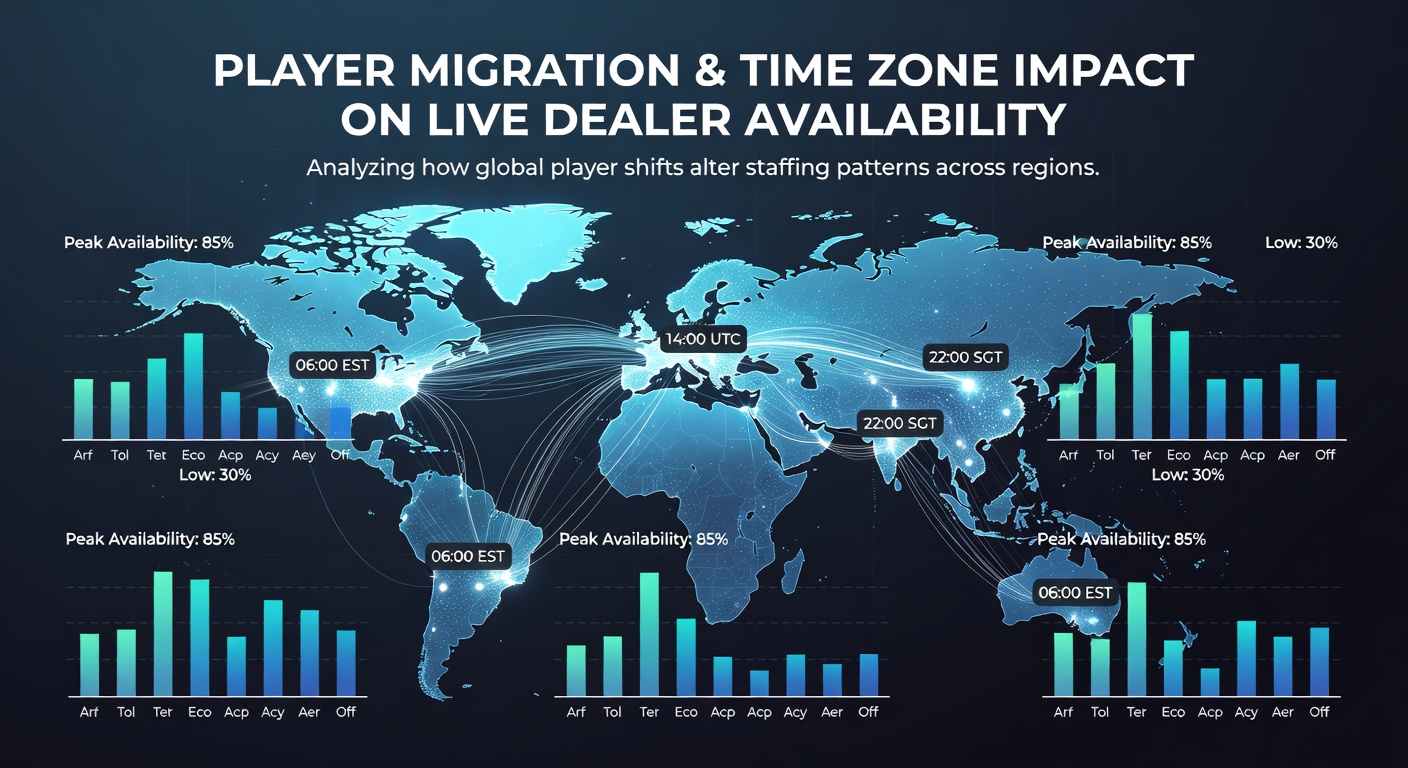
Operators also reference research published by the University of Sydney's Gambling Research Unit that models how daylight saving transitions in the Southern Hemisphere alter peak demand windows for Australian and New Zealand players seeking staffed tables during their evening hours. The models demonstrate that a single one-hour shift in a major market can redistribute up to fourteen percent of daily active users across networks within a three-hour window.
Dealer Staffing Strategies Across Studios
Studios in different regions coordinate through shared scheduling software that flags upcoming availability shortfalls based on player migration trends observed in prior weeks, and this coordination has reduced the frequency of empty tables during transition periods. Networks that once relied on single-region staffing now maintain redundant dealer pools in at least two time zones so that players can move seamlessly without leaving the same overall platform family.
Figures released by the European Gaming and Betting Association in early 2026 indicate that coordinated multi-studio operations lowered average player wait times for live dealer tables by twenty-seven percent compared with 2024 baselines. Those improvements occurred even as total live dealer traffic rose eleven percent year over year, suggesting that migration management rather than simple capacity expansion drove the gains.
Future Adjustments Based on Observed Patterns
Continued collection of migration data will likely prompt further refinements in how networks forecast dealer demand when major time zone changes occur, such as the start and end of daylight saving periods in participating countries. Observers note that platforms already testing predictive staffing models have recorded fewer abrupt player exits during availability handoffs, which in turn stabilizes overall network liquidity for remaining users.
Conclusion
Player migration datasets continue to illustrate how time zone differences directly influence live dealer availability across global poker networks, prompting operators to adopt staggered staffing and shared scheduling tools that smooth transitions. As more regions contribute session records to centralized analyses, the precision of these adjustments is expected to increase further, allowing networks to anticipate and accommodate movement patterns driven by the simple rotation of the Earth rather than by changes in player preference or regulatory conditions.