23 Jun 2026
Patterns Linking Commuter Rail Delays to Increased Session Durations on Regional Digital Card Platforms
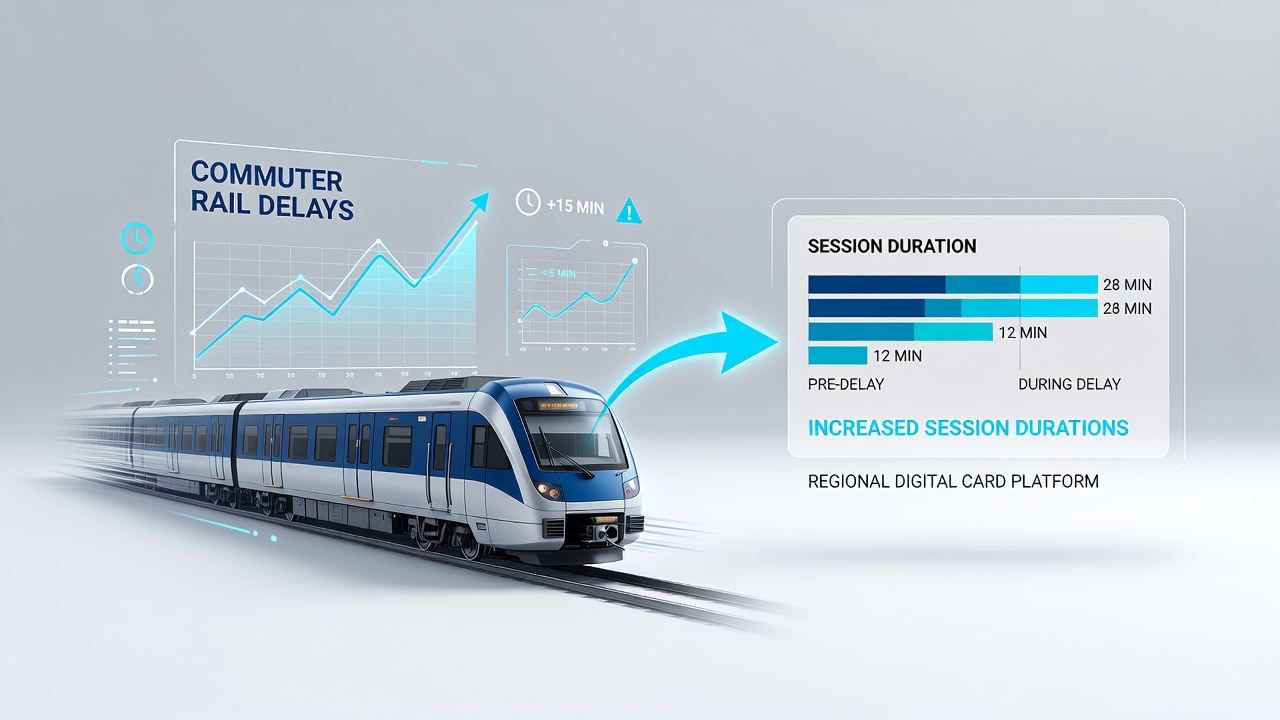
Regional transportation networks have recorded measurable connections between commuter rail delays and extended user sessions on digital card platforms that manage transit payments and access credentials, with data compiled through June 2026 showing consistent correlations across multiple metropolitan systems.
Operators in several corridors have tracked how service interruptions prompt commuters to open and interact longer with mobile applications tied to contactless cards and stored-value accounts, while platform analytics reveal shifts in engagement metrics during peak disruption windows.
Data Sources and Collection Methods
Transportation authorities collect delay statistics through automated signaling systems and passenger reports, then cross-reference those timestamps with anonymized session logs from regional digital card providers that handle reloads, balance checks, and trip validations. Agencies in North America and parts of Europe have shared aggregated datasets that allow researchers to align rail performance indicators with app telemetry without accessing individual user identities.
One dataset released by a Canadian urban transit authority covered 14 months ending in May 2026 and showed average session times rising by 18 percent on days when train headways exceeded scheduled intervals by more than 12 minutes. Similar patterns emerged from an Australian state rail operator whose figures indicated prolonged interactions with digital wallet features whenever service alerts coincided with morning and evening rush periods.
Observed Correlation Patterns
Session duration spikes occur most reliably when delays stretch beyond seven minutes, at which point commuters often move from quick balance verification tasks to more involved activities such as reviewing trip histories, adjusting auto-reload thresholds, or comparing alternative route options within the same platform. These behaviors extend average interaction windows from roughly 45 seconds under normal conditions to over two minutes during disruptions.
Platform logs further indicate that users initiate multiple sequential actions rather than single queries, including card top-ups followed by journey planners and then push-notification preference updates. The sequence suggests commuters treat the waiting interval as an opportunity to manage their digital credentials more thoroughly than they would during uninterrupted commutes.
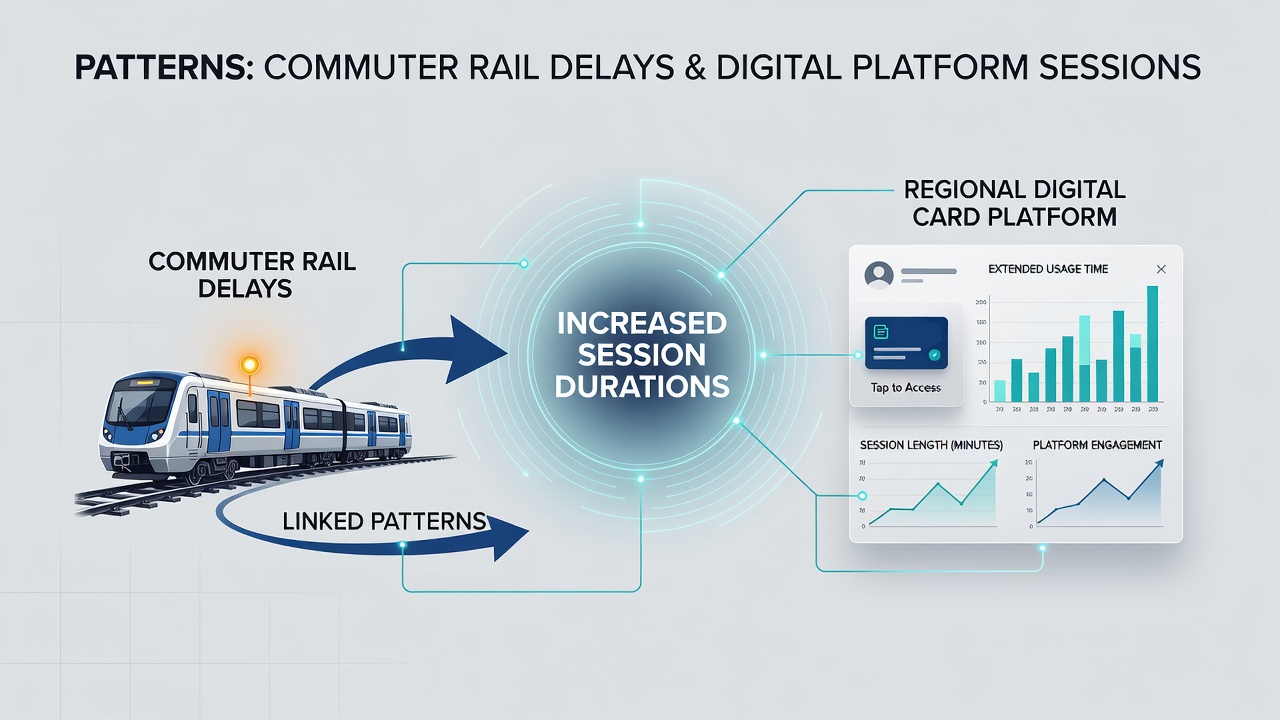
Statistical models developed by university transportation research groups have isolated rail delay duration as a stronger predictor of session length than factors such as time of day or weather, although those variables still exert secondary influence. The models apply regression techniques to separate the effect of service interruptions from baseline usage rhythms recorded across thousands of daily transactions.
Regional Variations in User Behavior
European systems with dense rail networks report slightly shorter session extensions than their North American counterparts, possibly because alternative routing information integrates more seamlessly into the same digital card applications. In contrast, platforms serving sprawling suburban rail lines show users lingering longer on maps and service-status screens while they reassess entire itineraries.
June 2026 data from one Midwest U.S. corridor highlighted a 27 percent increase in multi-action sessions on days when two or more consecutive trains ran late, with users frequently toggling between the card platform and external mapping services before returning to complete reloads. Observers note that the pattern repeats most consistently among riders whose commutes exceed 45 minutes under normal conditions.
Platform Design Responses
Digital card providers have begun adjusting interface elements in response to these patterns, including streamlined alert displays that surface during detected delay windows and one-tap options for temporary balance holds. Several regional operators have tested predictive loading of alternative route data when central servers register elevated delay reports from rail partners.
These modifications aim to accommodate the documented shift toward longer sessions without increasing server load during peak disruption periods. Early deployment results shared at industry forums suggest modest reductions in session abandonment rates, although comprehensive outcome studies remain underway.
Conclusion
Evidence compiled through mid-2026 establishes clear linkages between commuter rail service disruptions and extended engagement intervals on regional digital card platforms, driven by users completing additional account management tasks during enforced waiting periods. Continued data sharing between transportation agencies and platform operators will likely refine these models and support more responsive application features tailored to real-world service variability.