24 May 2026
How Regulatory Timelines Shape Feature Rollouts Across Competing Mobile Betting Platforms
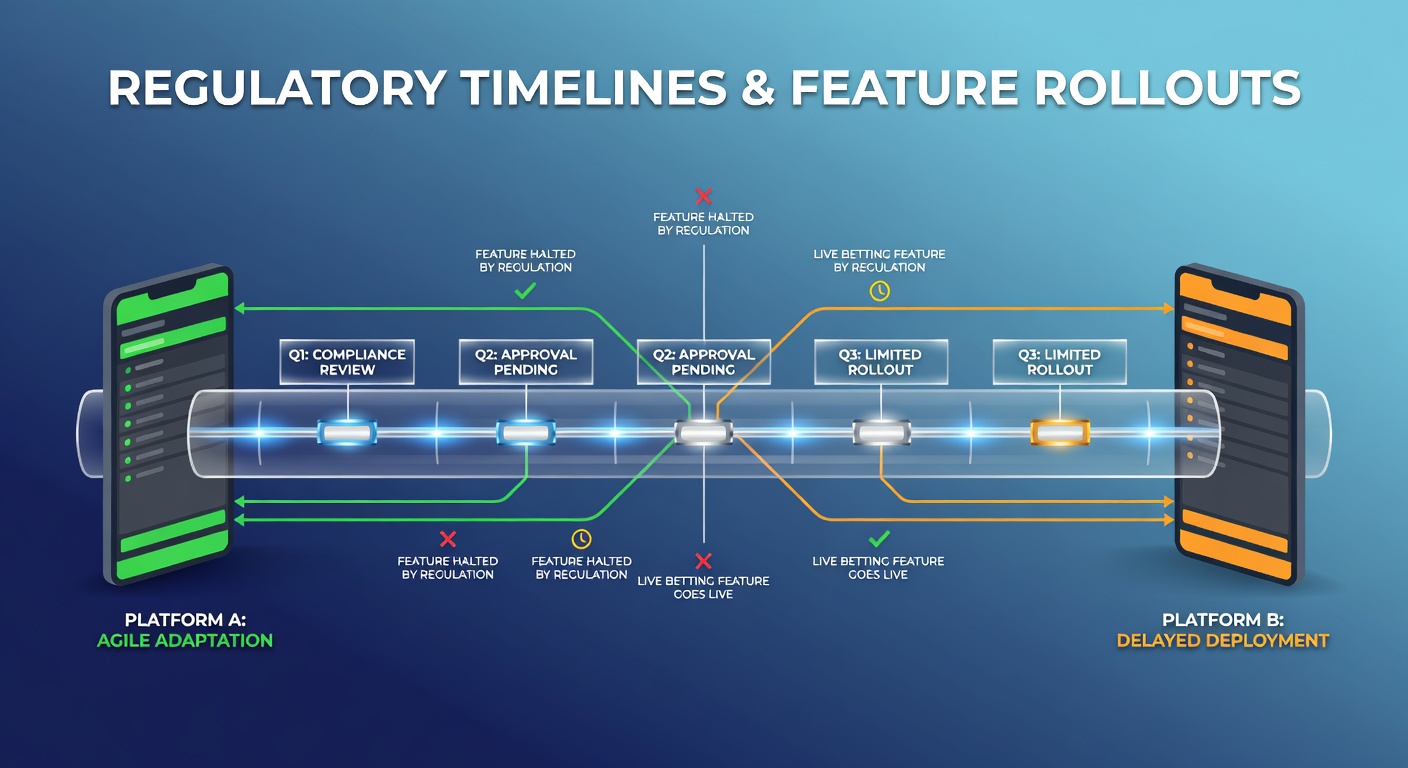
Regulatory approval processes determine when new features reach users on mobile betting platforms, and operators must align development cycles with varying agency review periods across jurisdictions. Data from multiple markets shows that platforms time launches to coincide with license amendments or updated compliance frameworks, which creates staggered availability of tools like instant cash-out options, personalized odds engines, and integrated live-streaming modules.
Approval Cycles and Platform Planning
State and national regulators require operators to submit detailed documentation for each feature addition, including security audits, responsible gaming integrations, and user interface testing results. In jurisdictions where review windows run 60 to 90 days, companies schedule beta testing phases well in advance so that final approvals land during planned marketing windows. Observers note that platforms operating in multiple regions maintain separate product roadmaps for each market because a feature cleared in one location may still await clearance elsewhere.
Those who've tracked rollout patterns across US states report that early-adopter markets such as New Jersey and Pennsylvania often see feature introductions several weeks ahead of neighboring states still finalizing their own technical standards. This sequencing gives certain operators temporary advantages in user retention while competitors await parallel approvals.
Regional Differences in Review Speed
European frameworks tied to the European Gaming and Betting Association guidelines typically process feature amendments through centralized technical assessments that last between four and eight weeks once initial paperwork clears. In contrast, some Australian state regulators apply layered reviews that incorporate independent third-party evaluations, extending timelines by an additional month or more. Research indicates these differences directly influence which platforms can introduce mobile-native features such as biometric login flows or real-time settlement engines first.
Case Examples from 2026
By May 2026 several Canadian provinces had completed updates to their remote gambling directives, allowing operators to deploy enhanced wallet functionalities after a standardized 45-day review period. Platforms active in Ontario and British Columbia coordinated submissions so that multi-currency support and instant withdrawal confirmations became available on the same calendar week across both markets. Meanwhile, operators awaiting similar clearances in certain US states continued limited testing with existing feature sets only.
Competitive Dynamics Driven by Timing
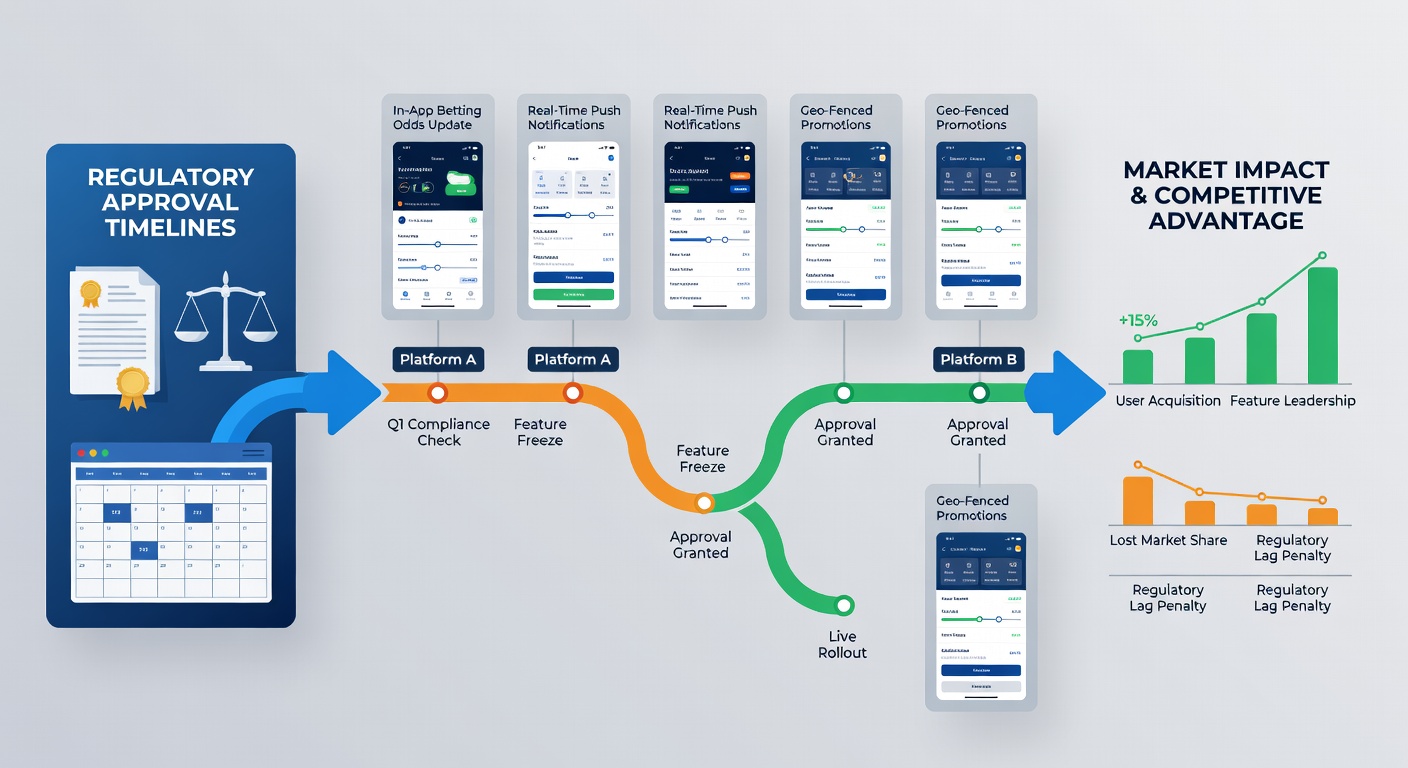
Platforms that secure approvals ahead of rivals often experience measurable shifts in active user numbers during the exclusive window. Figures from industry reports reveal that early access to features such as AI-driven bet recommendations or cross-sport parlay builders correlates with temporary increases in session duration on those specific apps. Competing operators respond by accelerating their own submission packages or by prioritizing features already pre-approved in overlapping jurisdictions to close the gap quickly.
Take one major operator that submitted documentation for a new live-dealer integration in two states simultaneously. When one state completed review in 52 days while the second extended to 78 days, the company activated the feature only in the faster jurisdiction and maintained a holding pattern elsewhere. This approach allowed the platform to collect performance metrics that later supported a streamlined resubmission in the slower market.
Technical and Compliance Overlaps
Regulatory bodies frequently require operators to demonstrate that new features do not compromise existing responsible gaming controls or data protection standards. Because these requirements overlap across regions, platforms develop modular codebases that can be activated once local approvals arrive. Studies conducted by research institutions in multiple countries show that companies using modular architectures reduce average time-to-market by 20 to 30 percent compared with those rebuilding features for each jurisdiction separately.
What's interesting is how payment-related features illustrate these patterns most clearly. Crypto wallet integrations, for example, move forward only after regulators finalize rules on transaction monitoring and tax reporting interfaces. Platforms therefore maintain parallel development tracks, advancing non-payment features while payment modules remain in review queues.
Conclusion
Regulatory timelines function as gatekeepers that dictate the pace and sequence of feature availability on mobile betting platforms. Operators that map approval cycles across jurisdictions maintain more predictable rollout schedules, while those that treat each market in isolation encounter greater variability. As new directives continue to emerge in 2026 and beyond, the ability to synchronize submissions with regulatory calendars remains a central factor shaping competitive positioning in the sector. Data from government agencies and industry associations continues to document these timing effects across North America, Europe, and Australia.